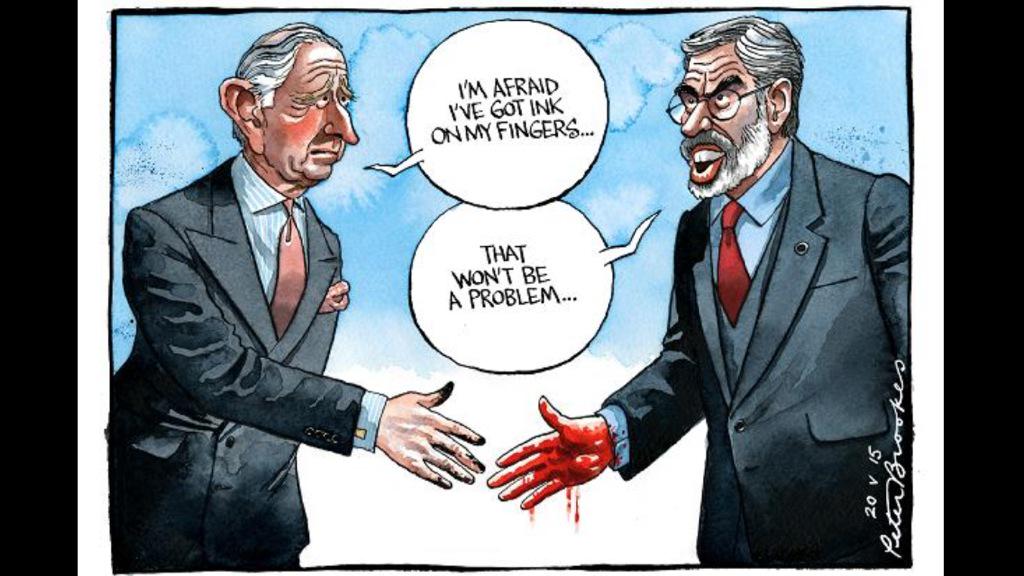
The BBC were working themselves into quite a state of euphoria over that handshake between IRA godfather Gerry Adams and Prince Charles in Galway yesterday. What sickened me MOST about a pretty revolting situation was the way in which the BBC coyly referenced Adams as leader of ..cough…”the Republican movement” without making it clear that he commanded the IRA terrorist campaign and would assuredly have been involved in the signoff of the murder of Lord Mountbatten all those years ago. The BBC is an agent for appeasement and for sanitising the bloody heritage of Adams and his vile cohorts. It sickens me.
I am always disappointed but not surprised to read this sort of idiocy.
B-BBC reader Dave Ward responds…
“I am about to send a letter to the editor, but from past experience, this probably won’t get printed!
Dear Editor,
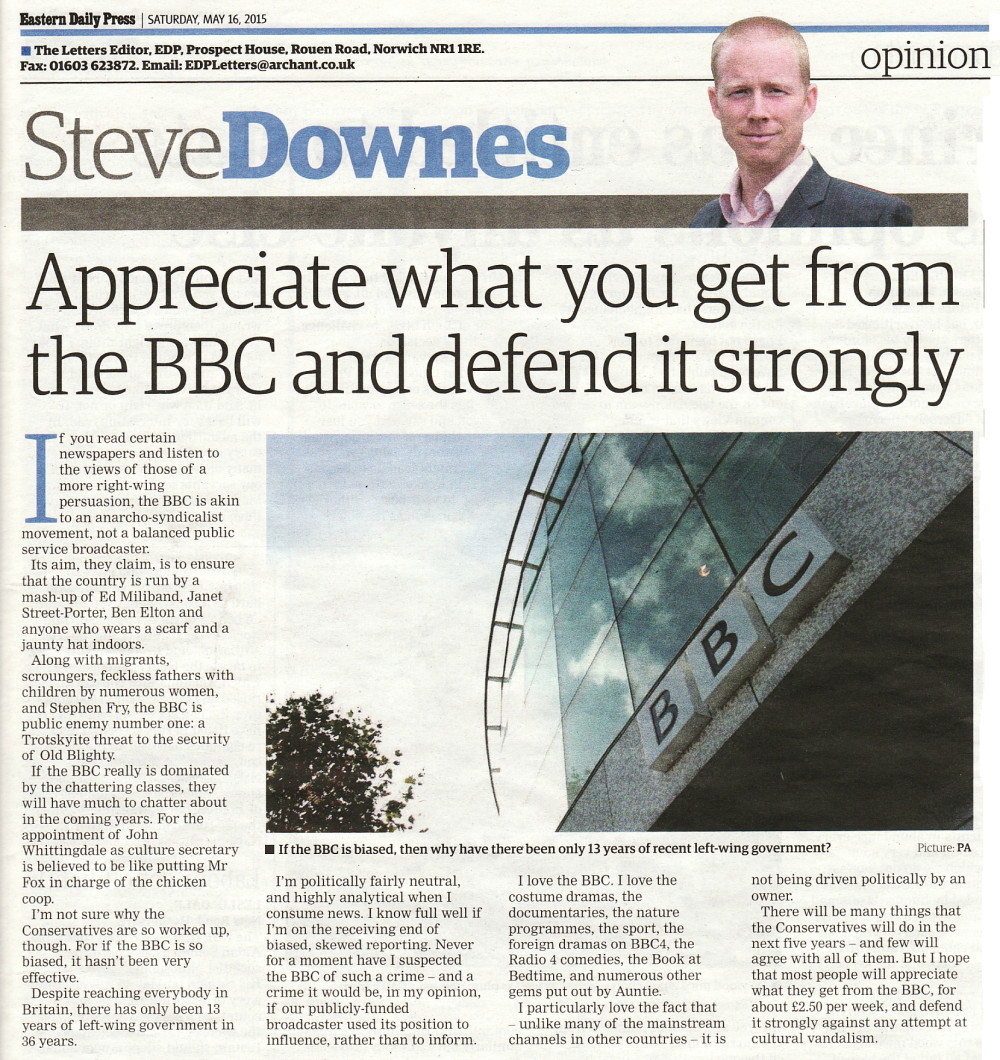
I assume that Steve Downes is trying his hand at comedy writing (EDP Opinion & Comment, 16th May), as I can’t believe his defence of the BBC is meant to be serious. He claims to “Know full well if I’m on the receiving end of biased, skewed reporting” and “Never for a moment have I suspected the BBC of such a crime”. I can only suggest he removes the welding goggles coving his rose tinted spectacles, and looks further. For a start, their daily “The Papers” TV programme – the backdrop for this features a number of titles, and right at the top is the only UK example, The Guardian. If that isn’t more than a little biased to the left, I don’t know what is. The BBC fought a long battle against a FOI request enquiring about the “experts” advising them on climate issues. When this effort failed it soon became apparent why: tinyurl.com/p3nwgml The BBC does indeed produce some wonderful specialist programmes, but their news and current affairs output can no longer be trusted, and the 1,000’s of viewers cancelling TV licences shows I’m not alone in that view. Mr Downes might also focus on what they don’t cover, as well as what they do. It is high time the organisation was given a shake-up.
At one time the EDP was fairly right wing, on account of its circulation area, but since a “night of the long knives” clear out of editorial staff it is now just as left wing as sister paper the Norwich Evening News. Both are part of the Archant publishing group, which we know contains a number of Common Purpose “graduates”, and clearly sucks up to the UEA which has many more. ”
The BBC has a new celebrity left winger to flood the airwaves with their views….Steve Hilton, a one time David Cameron advisor….which could explain a lot when you listen to his thoughts.
‘Parish’ Hilton is all about the ‘local’ now, anti-big business, anti-capitalist and confusingly seemingly also anti-communist bu he just doesn’t realise it. He has a very confused message and a very naive one. The BBC likes him though with him popping up everywhere, twice on Today today, on Marr’s Start the Week ,with that other favourite lefty guru Stiglitz, and given a free hand to promote his message on Newsnight….that message being very ‘Occupy’ and would seem better suited to Miliband than the Tories….as the Times points out…‘Steve Hilton, David Cameron’s modernising guru, has a message that the opposition should take to heart‘. One notable omission from Hilton’s hit list is the power hungry, anti- people EU….could it be because Cameron is pro-Europe? Are we being sold a political ideology by Hilton rather than a genuine attempt to understand the problems and come up with a solution?
Kathy Gyngell from ‘Conservative Woman’ on the Today programme (08:55) said Hilton was irrelevant and infantile….can’t say I disagree.
Hilton tells us he is against the centralised, uniform way of doing things by Government….isn’t that Communism and the Labour way, a way in which the individaul is irrelevant? And yet he ascribes it to Capitalism. He claims that for most of human history politics was local and it was impossible to be organised any other way….really? Has he never heard of the Aztec, Roman, Persian, Greek, Egyptian, Muslim, Soviet, SNP, etc etc empires? Has he never heard of the Domesday Book...’a landmark in the triumph of the centralised written record, once set down fixed forever, over evolving local oral traditions’, the rule of kings and queens, the Aristocracy, the Church? The centralised power of previous societies and ways of ruling were enormous and overwhelming, the privileged elite who held the reins of that power controlled it ruthlessly.
Life for people has never given them so much power than what they have today, especially in the capitalist West where consumer power, political power and now with the internet, the power to challenge the entrenched Media empires, has never been so strong….the power of ‘people power’ and bad publicity is enormous as shown by Thomas Cook being shamed into handing over money it received upon the death of tourists to a charity….but then again a powerful central government is essential to enforce regulations against such big institutions and businesses on behalf of ‘The people’. And in politics things are being shaken up radically….UKIP forced Cameron to change his politics, the SNP wiped the floor with Labour……there is no ‘status quo’ with one overwhelming, out of touch elite, they are vulnerable as never before….people have real political power…certainly it’s not perfect….the EU for instance is vastly out of touch and beyond the power of people to easily effect….but change is possible….the Soviet Empire fell because of ‘People Power’ such as ‘Solidarnosc’ backed up by Maggie and Reagan and those ‘useless’ Nukes….and the ‘Arab Spring’….which the BBC assures us was triggered and maintained by people on the ‘social media’.
Hilton of course talks about the Banks and tearing them apart but also the supermarkets saying that more competition needs to be injected by government…that ‘local’, less intrusive, less powerful government. He tells us that the barriers to entry by competition are too strong and the big supermarkets are just too powerful….has he never heard of Aldi, Lidl and the ‘Pound’ shops, the insurgent low cost supermarkets who are making the big supermarkets run for cover?
You kind of suspect Hilton is the victim of that very thing he tells us we should be wary of, the elitist, closed minds created by being in a limited environment that turns out to be an echo chamber reflecting and reinforcing ideas that he desperately wants to believe in. Just how many ‘real’ people does he talk to rather than activist campaigners and political geeks? Not many it would seem.
Why is the BBC giving him so much airtime? Great publicity for his book…..and yet his ideas smack of easy, utopian crowd pleasing, lefty schmaltz that lack any grounding in the real world and are completely unworkable in that real world….or irrelevant and infantile as someone said….much like Occupy and Giles Fraser.
‘Just in case you missed it, Sarah Monatgue interviewing a prospective labour leader candidate on Radio 4’s Today (16/05/15) does a Naughtie and says “the reason why we, er you lost the election………”. The relevant section starts around 51 mins in.`’
When the Labour Party wanted to communicate their values to a less than grateful Nation they carved them into the ‘Ed Stone’ for posterity, well three days at least.
When the BBC wants to communicate their values to an expectant Nation they send for the Easton, Mark Easton, for better or worse.
Neither of these two vehicles for ‘The Message’ met with unalloyed joy from a less than adoring population. The Ed Stone was quietly removed and secreted away, hidden from the ridicule and scorn that poured down upon it whilst, unfortunately, Mark Easton is still free to roam the world spreading his own brand of pious worthiness wherever he goes….in this case the interesting perspective that Islamic ‘extremism’ may in fact be thought heroic when the history books are written.
The BBC is not a stranger to offering support and reassurance to terrorists and those who seek to attack the West whether by violence or by using the Media itself, the BBC, along with the Guardian, often being the channel of first choice for the ‘disenfranchised’ to get their message out.
The BBC started early of course, banning Churchill from the airwaves for fear he would upset Herr Hitler, then giving priceless airtime and credibility to the IRA and its bloody message before moving on to the ‘militants’ of the PLO and Hamas, not forgetting the ‘moderates’ of the Muslim Brotherhood and the BBC’s decision to claim that the Muslim Trojan Horse scandal was a hoax generated by racism, Islamophobia and paranoia, and latterly of course the Islamists who can more often than not rely on a sympathetic hearing at the BBC.
Which brings us bang up to date and Mark Easton’s latest foray into the World of Relativity that the BBC exists deep within.
‘One can understand a government’s determination to prevent extremism that might lead to radicalisation and terrorism. But where to draw the line? And indeed, how do we draw up a definition?
There is, it seems to me, an inherent contradiction between banning orders and the core British value that one should be tolerant of different viewpoints.
History tells us that the development of new ideas of governance and government require people to think radically. Extreme views are necessary to test the wisdom of the mainstream.’
The BBC of course has no problem at all in deciding what is extreme and shutting such voices out of the debate…oh they may let them speak but only to give someone else the chance to cast derision, scorn and mockery upon them…..UKIP, the EDL and even the Tories know full well they are considered ‘extremists’ by the BBC.
Easton asks…
‘Would those who oppose homosexuality or multiculturalism or feminism be accused of threatening values of tolerance and equality?
Well yes if the person is Christian, no if they are Muslim…..as has been shown many, many times when Christians have been arrested on the streets or forced from their jobs because of their views.
Unfortunately for Easton a great many people objected to his claim that extremists like Choudray could be compared to great transformational figures in history such as Ghandi and that possibly, at some time in the future, we will come to believe extremists like Choudray were in fact the prophets and harbingers of a new and better way of life.
‘After my blog earlier this week and an appearance on the BBC News at Ten reporting on government plans to introduce extremist banning orders, it is upsetting to find myself accused of positively comparing the radical Islamist firebrand Anjem Choudary with civil rights hero Mahatma Gandhi.
I would understand people’s shock and horror if I had – but I did not. Quite the reverse. Anjem Choudary is nothing like Mahatma Gandhi. Nor Nelson Mandela for that matter. Indeed, that was my point and I am saddened if it has been misconstrued.’
Anyone reading the original article and reports of his news broadcast will know he is not being truthful with himself….he was clearly trying to relativise the issues and was suggesting that Choudray may be considered a hero like Ghandi or Mandela one day and that his extremist views might not just be a useful sounding board for society but a source and inspiration for a new society and way of governing.
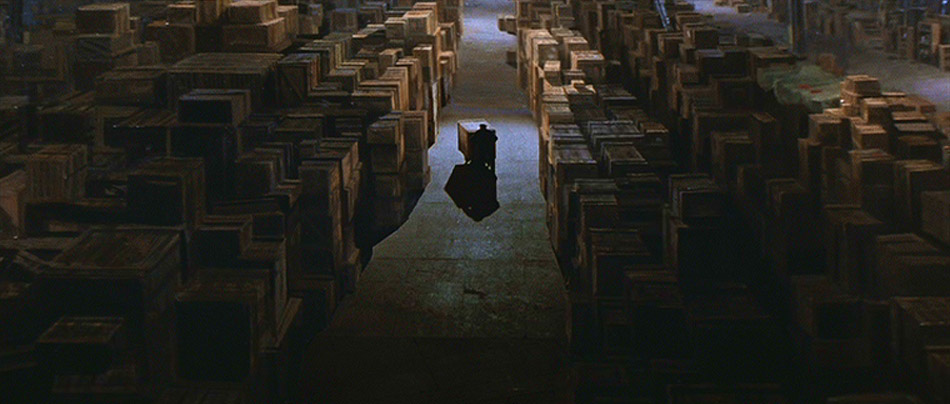
Easton….shame he can’t be found a quiet spot in a very, very big warehouse where he can be parked for a very, very long time…with no wifi.
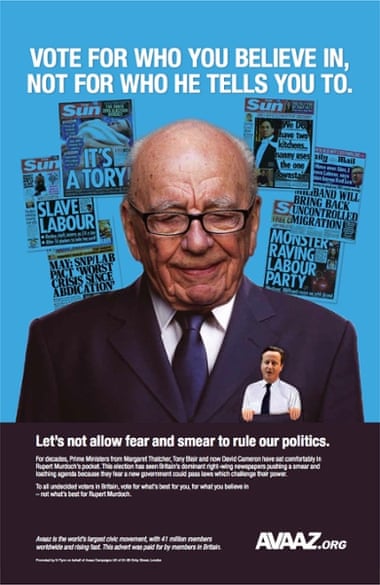
There has been a concerted effort by the Left, and that includes the BBC, to close down what they see as the ‘Right-wing Press’, an effort that went into overdrive once Murdoch switched his support away from Labour. Leveson failed in its intent to silence the Murdoch media stable but the battle goes on.
No chance is lost to conjure up some lurid conspiracy theory connecting the Press to the Tories or the dark forces of the shadowy elite that run this country in their own interests.
Miliband defeated, Chuka resigns before he’s even got the job, the SNP re-enact Bannockburn, Obama turns out to be a lot ‘whiter’ than he looks….all a result of the fevered manipulations of the gullible, addle headed gloopy minds of the Public by the Right-wing Press.
The latest excuse to put the Press in the stocks is that Chuka u-turn, the Left wasting no time in blaming Press intrusion into Chuka’s personal life despite Chuka himself saying this was not the case, and it turns out Chuka always was a bit of a flighty lightweight when it comes to pressure of any kind….
The video at the top of the post shows the BBC giving Owen Jones a friendly platform to peddle his anti-Murdoch narrative on the ‘Owen Jones’ Show’.
Jones demands that the Media only looks at what he calls substance not private lives and personality. Trouble is he’s not averse to doing just that himself when it suits.
But before we examine Owen’s claims about a Right-wing Press conspiracy let’s have a look at his powers of prediction, his political antennae at work……from 2013:
‘David Cameron is sunk, kaput, finito. He leads a party that has not won an election since 1992: back when nearly no one had heard of the internet; before text messages, DVDs, and even Take That’s first number one hit.
Governing parties almost never increase their vote share at the next election.
Whether or not Labour gains an overall majority in two years’ time, the Tories cannot win, and this famously ruthless party will boot out its loser leader. To borrow a phrase from Italian comedian-turned-politician Beppe Grillo, David Cameron is a dead man talking.’
Turns out that predictions of Cameron’s political death were somewhat exaggerated. Whatever did become of him?
What of Jones’ dire prophecies that the Right-wing Press are conspiring to undermine Democracy on the orders of their shadowy masters? Are they any more credible than his line about Cameron? It turns out that the opposite is true…the real conspiracy is from the Left to silence a free Press and to impose a Leftwing government upon a people gulled and deprived of genuine debate and information.
The crusade against tabloid journalism spreads far wider than the bungling CPS.
The authoritarian fiasco of Operation Elveden is only the end result of a campaign to sanitise Britain’s unruly press, involving everybody from political leaders and top judges to police chiefs, celebrity crusaders and assorted media snobs. All of them share the same contempt for what one top prosecutor called ‘the gutter press’.
It was the Leveson Inquiry, let us recall, that gave the stamp of official approval to the witch-hunt. It was a showtrial in which the tabloids were found guilty even before proceedings began. The allegedly liberal Guardian has often been in the forefront of the tabloid-bashing ranks, while the BBC has acted as official cheerleader for Lord Justice Leveson, the police and the CPS (and then as chief mourner, when the juries failed to go along with the script).
We need to remind them all that freedom of speech and of the press must mean exactly that – not the ‘freedom’ to say and publish only that of which judges, policemen and assorted prigs approve.
Operation Elveden stands exposed as the result of a political crusade, if not a conspiracy, to criminalise tabloid journalism. Yet the guilty men and women behind that crusade, launched from the heart of Britain’s political and cultural elite, have not yet given up on their campaign to tame press freedom. It is high time they were all held to account.’
It also turns out, ironically, that it is the Leftwing BBC that did for Chuka. No, really. HIGNFY explored Chuka’s policies (6 mins in) and as a result he issued an immediate statement that he had withdrawn his candidacy for leader of the Labour Party….illustrating that HIGNFY is ‘the most powerful programme on televison…if the Tories are watching leave the BBC on.’ Made all the more amusing because the presenter is Labour friendly Robert Peston and his wig…calling Chuka an ‘amateur’.
The BBC does however seem to take Owen Jones’ mutterings seriously whilst laughing along in matey fashion with him…..here he is again in the Guardian this time putting his thoughts down in black and white…..
‘I’m no Chuka-ite, but what a travesty if he’s been bumped out of the Labour leadership competition because of media intrusion. Rather than scrutinising the ideas and policies of our political leaders – except to demonise and caricature them if they even timidly step outside the political status quo – instead the media focuses on personality and personal life. Allegedly doorstepping his family, including his girlfriend’s 102-year-old grandmother – is this really how “media scrutiny” should work in Britain in 2015?
The media has disastrously failed to scrutinise the government’s policies, often serving as a de facto extension of the Tory party’s propaganda unit. Instead it’s personalities and private lives that are hunted. It’s sad. And we all suffer, and our democracy suffers, because of it.
What exactly did ‘they’ do to Miliband? Apparently ‘they’ were race-baiting…….
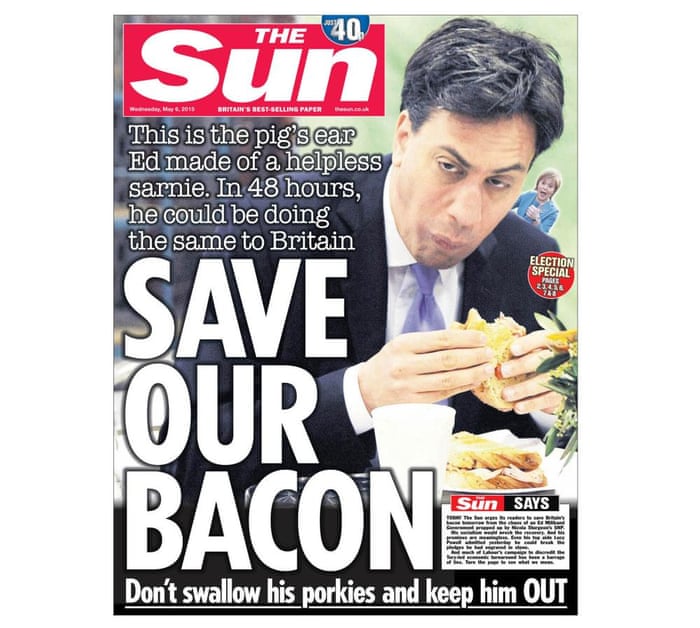
Is the Sun’s ‘save our bacon’ election front page antisemitic?
Can we agree at least on this: today’s Sun front page, featuring Ed Miliband eating a bacon sandwich, is cruel, abusive and puerile. We should also be able to agree that savage satire of politicians is inevitable and even desirable in a free press.
But there’s another question where no agreement is going to be possible: was the front page of the Sun surreptitiously antisemitic?
Hang on….Miliband is not ‘Jewish’, he’s from a Jewish heritage…..hence he is eating a non-kosher bacon sandwich, the ‘Tory Press’ didn’t trick him into eating that… it was a PR stunt by Miliband…..that it went wrong is entirely his fault. This claim of anti-Semitism is itself the real story….a very nasty smear alleging racism or in this case anti-Semitism, a tactic used by the Left all the time to silence its critics.
Jones strangely seems to have missed the rather prominent line in that article that undermines his argument completely….’We should also be able to agree that savage satire of politicians is inevitable and even desirable in a free press.’
Owen Jones claims to want to stick to the substance of the arguments but he himself isn’t averse to trying to use ridicule to attack his enemies……
He has nearly 10 million Twitter followers; his YouTube interview with Ed Miliband received well over a million hits and counting; he is listened to by hundreds of thousands of disillusioned Britons, particularly young people who have been repeatedly kicked over the last few years. Russell Brand matters.
Time is running out. But in recognising the gravity of the situation, Russell Brand has done his bit to stave off disaster and defend the struggles for justice that now beckon.’
The discomfort with democracy, the return of the view of voters as insufficiently informed and easily manipulated, is becoming widespread among cut-off elites. Only where once it tended to be the right that railed against voter dumbness, now it’s the left.
The Guardian’s Polly Toynbee used election day, not to celebrate the great right of people to choose their leaders, but to continue the slurs against what she called ‘weak readers’ — members of the electorate whose ‘mind-blowing ignorance’ means they are ‘unaware how their daily struggles will be fought out in distant Westminster’.
Neil Kinnock bemoaned the ‘mood and self-delusion’ that gripped the electorate and made them vote in a self-defeating way. The high priest of the chattering classes, Canon Giles Fraser, railed against the whole idea of democracy. It is little more than an ‘aggregation of self-interest’, he said. He saved his sharpest barbs for ‘the poor’, asking: ‘Why do the poor vote when, by voting, they merely give legitimacy to a system that connives with their oppression?’ Al Gore’s handwringing over the media’s ‘power of persuasion’ and how it triggers mass thinking that is not ‘modulated by logic, reason [or] reflective thought’.
‘Tory press barons worried Labour would end their tax scams published Cameron’s propaganda day after day.
And the vilification worked with gloop-brained voters frightened into sticking with the Tory nasty nurse for fear of something worse.’
The ‘Tory Press‘?
“Rupert Murdoch and the Daily Mail have had British politicians in their top pocket for decades,” said Coogan. “The smear and fear agenda they have peddled over the past few weeks has been pretty shameful. Thankfully we don’t have Fox News on TV, but sadly this election has shown that we do have it in printed form.”
No Fox News but even the Labour supporting BBC had a pop at Miliband because he was so bad…so not just the incorrigible RWP…..
Here is a demonstration of why Miliband lost…..he remained the eternal student activist never rising above the petty squabbles and small politics of that type of environment. Miliband, instead of standing aloof from the attacks on his personality and his ineptness in a statesman-like manner, decided to personally rebut every charge against him in an effort to look both the vulnerable victim and the strong man in standing up to the ‘bullies’….Miliband never looked convincing as the tough all rounder…never less than when he spouted the Americanism ‘Hell yes I’m tough enough’ as everyone watching knew he wasn’t and that the phrase had been practised long and hard with his spinners before hand. Here he is being dragged unwisely into the mud flinging looking more like the office boy every day……
Jones claims we shouldn’t look at the personality of the politicians….and yet their personality reveals so much about how they will react when the time comes to do the job for real. How often has Miliband shown himself to be wanting when off-script and having to respond to spur of the moment events. The Telegraph has kindly put together a few examples of his struggles with real life…….
The BBC itself isn’t shy about looking at the man behind the mask…here demonstrating why eating a bacon sandwich with dignity can have an effect on how people perceive you and hence treat you as it talks about how Cameron’s charm and statesman-like attitude helps him...’His easy charm and ability to appear “prime ministerial” at news conferences and summits helped ensure his personal poll ratings remained well ahead of the Conservative Party’s ratings.’
The BBC delves into Cameron’s past life without embarrassment looking at his personality, his background and his family, putting them all together to form a picture of David Cameron ‘the man’ and politician…..
Mr Cameron’s presentational skills were never in doubt.
His easy charm and ability to appear “prime ministerial” at news conferences and summits helped ensure his personal poll ratings remained well ahead of the Conservative Party’s ratings.
His laid-back, almost patrician style – and tendency to surround himself with advisers from similar backgrounds – led to accusations that he was too remote from the concerns of his party’s rank-and-file, some of whom drifted off to the UK Independence Party, with its traditional right-wing messages on Europe and immigration.
The one fact everyone knows about him is that he comes from a privileged background. He has never made a secret of it.
Not only was he the first former pupil of Eton to hold office since the early 1960s, he can also trace his ancestry back to William IV, making him a distant relative of the Queen.
His biggest mention in the Eton school magazine came when he sprained his ankle dancing to bagpipes on a school trip to Rome.
Samantha Cameron, who works as the creative director of upmarket stationery firm Smythson of Bond Street, which counts Stella McCartney, Kate Moss and Naomi Campbell among its clients, has been credited with transforming her husband’s “Tory boy” image.
She has a tattoo on her ankle and went to art school in Bristol, where she says she was taught to play pool by rap star Tricky.
The couple were introduced by Mr Cameron’s sister Clare, Samantha’s best friend, at a party at the Cameron family home. They were married in 1996.
So there are plenty of things that need to be considered when we judge a man who is putting himself forward as the leader of a political party and potentially the Prime Minister, not just his policies.
But then what of Jones’ demand that only ‘substance’, the policies themselves, matter? Does he always stick to that line or can it be cast aside when convenient? It seems it can be.
When it comes to education Jones thinks that there is far more to it than mere results and league tables….personality and background now count for everything…..
This champion of the privately educated – and Britain’s new moral arbiter – suggests that state education is responsible for the country “turning out too many amoral children”.
The cynic will look around the cabinet table and query whether private schools are all equipping their students “with the moral compass they need for life”, as he puts it.
It’s a shame, because children from well-off backgrounds who do go to comps thrive: one study looking at a sample of middle-class kids at inner-city comps found they “performed brilliantly”, and 15% of them went to Oxbridge. According to the Organisation for Economic Co-operation and Development (OECD), there is little difference in the performance of state schools and private schools when you take into account the child’s background. “Much of the advantage that comes from private schooling is confirmed by the social-economic context, not necessarily in value added,” as the OECD put it.
Jones is so annoyed at people with backgrounds and characters formed by such upbringings that give them an advantage that he wants to abolish Oxbridge and level the playing field…by dumbing down……
Oxbridge: “isn’t really simply an educational elite, it is partly a social elite, because the people it draws from overwhelmingly are from the most privileged backgrounds.”
‘How easy it was to scrutinise US power when George W. Bush was in office. After all, it was difficult to defend an administration packed with such repulsive characters, like Dick Cheney and Donald Rumsfeld, whose attitude towards the rest of the world amounted to thuggish contempt.’
Jones is not above a little hypocrisy…..slapping down Cameron for making a comparison between the 1930’s and Putin’s actions now…..
Vladimir Putin is responsible for some awful human rights abuses in Ukraine, but Cameron drawing parallels to Hitler is a cheap, politically motivated shot
Owen Jones: William Hague is wrong… we must own up to our brutal colonial past
We associate the term ‘concentration camps’ with the Nazis. But it started with the British
What all that shows is just how Jones’ ‘values’ shift when convenient. One moment personality, character and background maketh the man and are essential in judging that person, the next moment he denounces all such judgements as irrelevant and insubstantial distractions that demean politics and count for very little.
It also shows how Jones is quite prepared to trawl the depths himself and use insult and ridicule to attack those whose politics he doesn’t like and is ready to indulge in deception and lies to bolster his own narrative whilst attacking the integrity of others who do the same.
Jones of course is just one of many on the Left who indulge themselves in such games and are orchestrating a relentless campaign against a free Press in order to ensure that only the ‘approved’ messages are fed to the Public in a sinister and dangerous ploy that’s endgame is the closing down of free speech and the fair and democratic society that we aspire to, the Guardian implying we investigate the Right-wing Press and ‘moderate’ their output to presumably suit their own cultural and political agenda…
‘The press’s role in the 2015 election requires more investigation. As so often, the coverage over six weeks tells us little more than we could have anticipated before the campaign began. Agenda-setting over a longer period is far more important’
Orwell would be horrified that ‘1984’ has turned out to be a manual for the Left rather than serving as a warning of the horrors that await a world that allows itself to be manipulated and controlled by those who claim to be acting in its best interests whilst all the time working to imprison you mentally and physically if you don’t co-operate, closing down free thought, free speech and the individualism that has brought so much success and pleasure to people who have been the beneficiaries of the bloody battles, intellectual and on the actual battlefield, fought over centuries against the oppression and tyranny of institutionalised terror, all too often religious, to make such a society possible.
Owen Jones and his ilk seem to want to bring all that tyranny and oppression back.
All that is holding back the rampages of a BBC on steroids is the EU….leave the EU and the BBC will be free to crush the commercial sector. Never vote UKIP…hurrah for Carswell and his anti-UKIP Kamikazee death plunge!
The BBC faces a major backlash from independent television producers over plans by director-general Tony Hall to compete for programme commissions from other broadcasters and internet services such as Amazon and Netflix.
A group of Britain’s biggest independent producers is preparing a complaint that the expansion will distort competition and amount to illegal state aid.
The threat of a legal complaint to European competition authorities comes as a blow to Lord Hall’s plans for the BBC.
Lord Hall’s plans have led to suspicions from commercial players that the BBC is seeking to build up its global presence with the help of taxpayer support.
A commercial BBC Studios would at least be expected to feed profits from programme-making for other broadcasters back into the BBC to supplement the licence fee. The £3.7bn per year in taxpayer funds are already bolstered by more than £1bn from commercial operations such as international licensing of BBC programmes.
Oryem was abducted by the LRA for two days in 2003. They cut off his lips and ears with a knife and his fingers with an axe.
Stephanie Hegarty…just what is she good for? What does she bring to the BBC other than trite, anodyne, derivative worthiness that we expect from Anglican priests?…somewhat ironic, as you’ll see….she’s not a fan of Christians.
DB on this site and Is the BBC biased? ( Yes it is whatever Cardiff Uni tells us) have been giving Stephanie the old one two for her ever increasingly partisan tweets…. such as this latest example which seems to suggest that the US jury are ‘extremists’ for imposing a death sentence on a mass murderer…
The extremists are winning.. 🙁 Death sentence for Dzhokhar Tsarnaev http://t.co/ftD7Q5IrUi
The Tweets unavoidably drew my attention and I thought she was worthy of a closer look…and when you see what she is interested in you can understand why the BBC snapped her up from the New Statesman as they did….she is a budding Paul Mason if ever there was one.
However there is one article that deserves a deal of attention, one which underlines her world view….or maybe she was high on dope or was it just uncut self-righteousness which fired her up and gave strength to her arm as she aimed her censorious brickbats at numerous targets….all the usual suspects for the Left? It looks like she was working for the BBC when she wrote this tract in April 2012….yep, here she is in February and then in November 2012 on FOOC.
‘If the World Service is to survive it will only do so by becoming a tool of corporate colonialism exporting the ideals and propaganda of those with money on those without.
The coallition government will continue to thump about quashing every public institution it can, tearing apart the welfare state, selling schools, forests and anything they can feasibly attach a price tag to. The World Service is just another casualty in what is already an old but painful story.’
Anyway, back to her tract…
There is an organisation called ‘Invisible Children’ that was set up in 2004 to help the children caught up in the war in Central Africa involving the Lord’s Resistance Army, and to encourage governments to get involved to stop the war.
Part of that campaign was a film released in 2012 called ‘Kony 2012’ which set out their case and their desire for the leader of the LRA, Joseph Kony, to be captured and put on trial at the International Criminal Court.
The film was highly successful and generated huge support that influenced US politicians to agree to help defeat the LRA.
‘Last week a video launched on to the internet with the aim of making a psychotic megalomaniac famous.’
Well, Russell did have a mental breakdown some time after the release of the film and was hospitalised for that…nice that Hegarty thinks his mental breakdown is grounds to attack him….an attack which she continues later on.
As for making him famous? Does she have no idea of just what the film and the organisation actually achieved?
She goes on to launch an unrestrained and outlandish attack on Russell’s young (4 years old?) son…
Most of this particular film seems to be taken up by a very blonde and camera-friendly child purportedly of Jason’s own making. This puzzling creature seems to be as adept at using a smart phone as monitoring an arsenal of nuclear weapons. In the video he subtly demonstrates his skills with both.
For a second it seems this could be an infomercial for a new breed of toy soldier – a robot child made out of coltan maybe. Only the genius of Jason Russell could fathom making a small human out of the stuff – a precious Congolese mineral usually used for making mobile phone and missiles – and employing him like a small and loveable, sexless fembot.
Watch the film to see just how weird Hegarty’s interpretation is…..absolutely nowhere near what appears on screen.
Then we get to her own politics as she slips into Lefty speak…
‘These people are no longer in the jungle they are not invisible and most of them are not children anymore. They need all the things we need, jobs to get up for in the morning, schools to send their children to, family, respect, stability and peace. Not wristbands, posters and glitzy, irrelevant films or a raging neo-colonial war.’
Well if they need to go to school, need jobs, need stabiltiy and peace….that’s pretty hard to achieve when there’s an armed band roaming the country killing, mutilating, raping and kidnapping the children. As for neo-colonial war….it was being waged by almost purely African troops.
Hegarty then criticises Russell for ‘supporting’ the Ugandan President Yoweri Museveni whom she denounces as homophobic, a trait she then links to a Christian group in the US. But is Russell supporting Museveni or just trying to stop the war? Hegarty thinks the war should continue as that’s better than having an unpleasant homophobe in power in Uganda…
‘The real triumph here for activism and the power of youth.. and the internet. After all can motivating people to care about their fellow man be a bad thing, no matter how veiled, misguided, manipulative and potentially corrupt the cause? Yes, I think it can.
Jason Russell and his army of internet-savvy minions and masters of the YouTube generation are a more hideous force than a clapped up, demented warlord hiding in a bush will ever be.’
Note that she thinks Russell is more dangerous than Kony and his band of murderous thugs….who have killed over 100,000, displaced nearly 2 million and abducted around 30,000 children to be used as child soldiers or sex slaves….the World Bank estimated as many as 66,000 children had been abducted.
‘Whether it’s to do with anger against the police, a sense of general alienation or simply consumerist greed, this week’s rioters in Britain had a message, however incoherent, for their society.’
Hegarty finishes off with this ripe diatribe which lays out the real ‘enemy’ of civilisation….
Generally, when celebrities and movie stars, the entire US political right wing – along with most of the mainstream church and Fox News – launch upon an idea you can vouch for the fact that it’s not a very good one – experience in Afghanistan, Iraq, Vietnam seems to be pretty solid on this one, but fuck experience.
The moral of this story is that its ok to peddle untruths, wreak war and masturbate in public, so long as you make nice films full of condescending bullshit about helpless Africans, are a Christian and preferably not gay.
White, Christian, Republican, Straight, work for Fox News…..all sound rather familiar as targets for abuse from the BBC…no wonder they gave Hegarty a job…she’s ‘one of them’.
In fact it was Obama who actually signed off on sending troops to Uganda and the campaign had cross party support in the US from both Democrats and Republicans. So a black president, a Democrat, waded into the racist neo-colonial wars…..how did it go so wrong?
Hegarty, so full of remorse for being white, so full of guilt for living in a society that allows her to make a good living from writing nonsense, so full of bile towards those who would help others because she thinks they aren’t Left wing enough, or black enough, or gay enough…perhaps she should consider as she types away that others are not so lucky….such as this victim of the Lord’s Resistance Army, Oryem Kenneth, 42, who was abducted by the LRA for two days in 2003. They cut off his lips and ears with a knife and his fingers with an axe….
He’s lucky, he had someone to tell his tale and seek to put an end to the conflict that resulted in his mutilation.
If Hegarty had her way there would be endless people such as Oryem Kenneth.
Search Biased BBC
Recent Comments
pugnaziousOct 17, 10:27 Weekend 17th October 2026 The BBC is just a mouthpiece for Islamist propaganda…this is the BBC that walked a black-clad, bearded Muslim wearing a…
tomoOct 17, 10:25 Weekend 17th October 2026 Madame Creosote falls upwards again ??? https://twitter.com/Artemisfornow/status/2111354306825760946 “I do what I’m told” was her defence in court…
FlotsamOct 17, 10:09 Weekend 17th October 2026 I’m absolutely fed up with Burnham going around everywhere making policy announcements that should properly be made in Parliament. Speaker…
tomoOct 17, 10:01 Weekend 17th October 2026 BBC “plays along”? The whole rationale / raison d’etre of TNI is exactly the orchestration / manipulation of information as…
JohnCOct 17, 09:54 Weekend 17th October 2026 I have to disagree with that assessment Fed. It already happened on Father Brown – and the net result was…
Emmanuel GoldsteinOct 17, 09:51 Weekend 17th October 2026 Why is it that Burnham is very keen to split the UK up into its four Countries (devolution) so that…




 Owen Jones